


Every week e-safety adviser Alan Mackenzie sends me weekly updates. They are useful teaching resources but also parent guides to keep you up to date with current trends.
Here are this week’s tips:
Report – A Healthy Influence?

A new report from The Children’s Commissioner for England examines how children aged 13-17 are being exposed online to appearance-changing product, ranging from skincare and supplements to dieting products, prescription-only weight-loss drugs and skin-lightening products.
In the Commissioner’s survey:
78% of children said this kind of exposure has a negative impact on self-esteem.
41% reported seeing prescription-only weight-loss drugs online (despite an advertising ban).
Exposure differs by group (e.g., Black and Asian children were more likely than white children to see skin-lightening products; boys were more likely than girls to see muscle-building supplements).
The report also notes some children are acting on what they see, e.g. 8% reported buying or trying non-prescription weight-loss pills.
The report argues that ad-heavy social media environments (including influencer marketing) and gaps in enforcement are enabling this exposure, and it sets out several policy recommendations.
It makes for an interesting read. Although the report focuses on children 13-17, given that younger children are using social media (and have to lie about their age to do so) it isn’t beyond the realms of possibility that this affects younger children too.
Link: A Healthy Influence? Children’s Exposure to Appearance-Changing Products Online.
Instagram – Parent Alerts
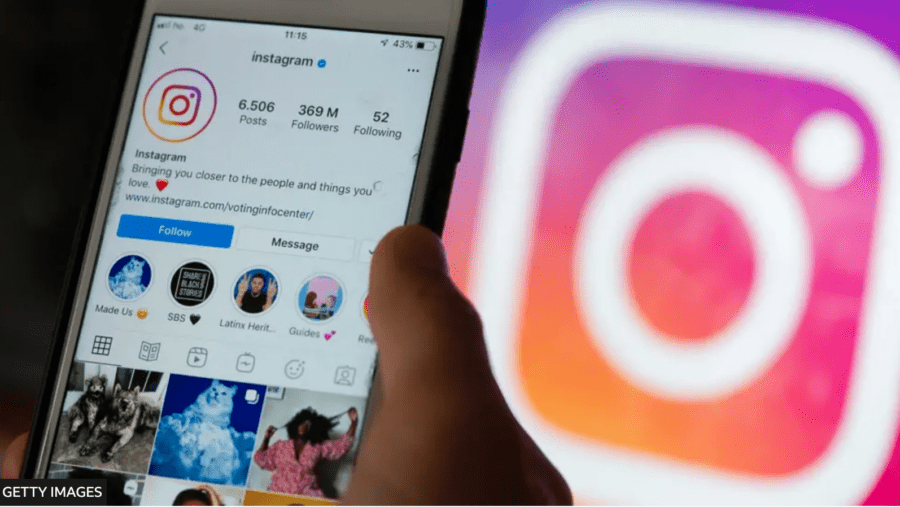
Instagram has recently announced that it will begin to alert parents if their child repeatedly searches for self-harm content. On the face of it this sounds like a positive move forward. Personally I’m not impressed, I don’t think this is a step in the right direction, when you dig deeper there are huge concerns, for example:
The childs’ account needs to be a supervised account. No young person is going to be searching on Instagram for particular content if parents can see what they’re searching for, they will simply use another account or a different app.
If a parent does receive an alert, what will they do, how will they react?
But the big one – instead of stopping the content reaching the young person in the first place, Meta (Instagram) have simply abdicated their responsibility and pushed it onto parents.
Don’t get me wrong, any signal to a parent can be a good thing and I’m sure parents will want to know, but shouldn’t prevention be the first consideration?
Link: Instagram to alert parents if teens search for self-harm and suicide content.
Did You Know – TikTok tracks you even if you don’t use the app?

I remember listening to The Scott Mills radio show years ago where he described that an adult friend of his signed up for a Facebook account late into his 20’s. As soon as he did, he was dumbfounded how Facebook was able to make recommendations about his friends/family and show advertising directly related to his previous web browsing. He had never used Facebook before.
Welcome to tracking pixels used for data harvesting. These have been around for years, installed on hundreds of millions of websites to track users and collect/store or sell that information. This is digital footprint 101, it’s commonplace, without pixel tracking Google probably wouldn’t exist.
So it shouldn’t be any surprise that TikTok also has tracking pixels all across the web. These pixels are often described as innocuous but I disagree. Imagine a young person who is searching and browsing topics that are very sensitive, e.g. pregnancy, mental ill health etc., ads related to these subjects are going to start showing up on almost every ad-enabled site or app and this can become problematic.
There are various things you can do, such as using a different browser (e.g. DuckDuckGo). Some ad-blockers will also block data harvesting.
To read a more detailed article see the link below.
Link: TikTok is tracking you, even if you don’t use the app.
For Parents – App Controls to Support Children

Jenny is a mother with two teenage girls who feels the pressure of keeping up to date with online safety, new app settings and more the same as other parents. In this article and YouTube video jenny shares how she uses app-level parental controls to manage social media use across her daughters’ phones and tablets.
Link: Using App Controls to Support Children.
