

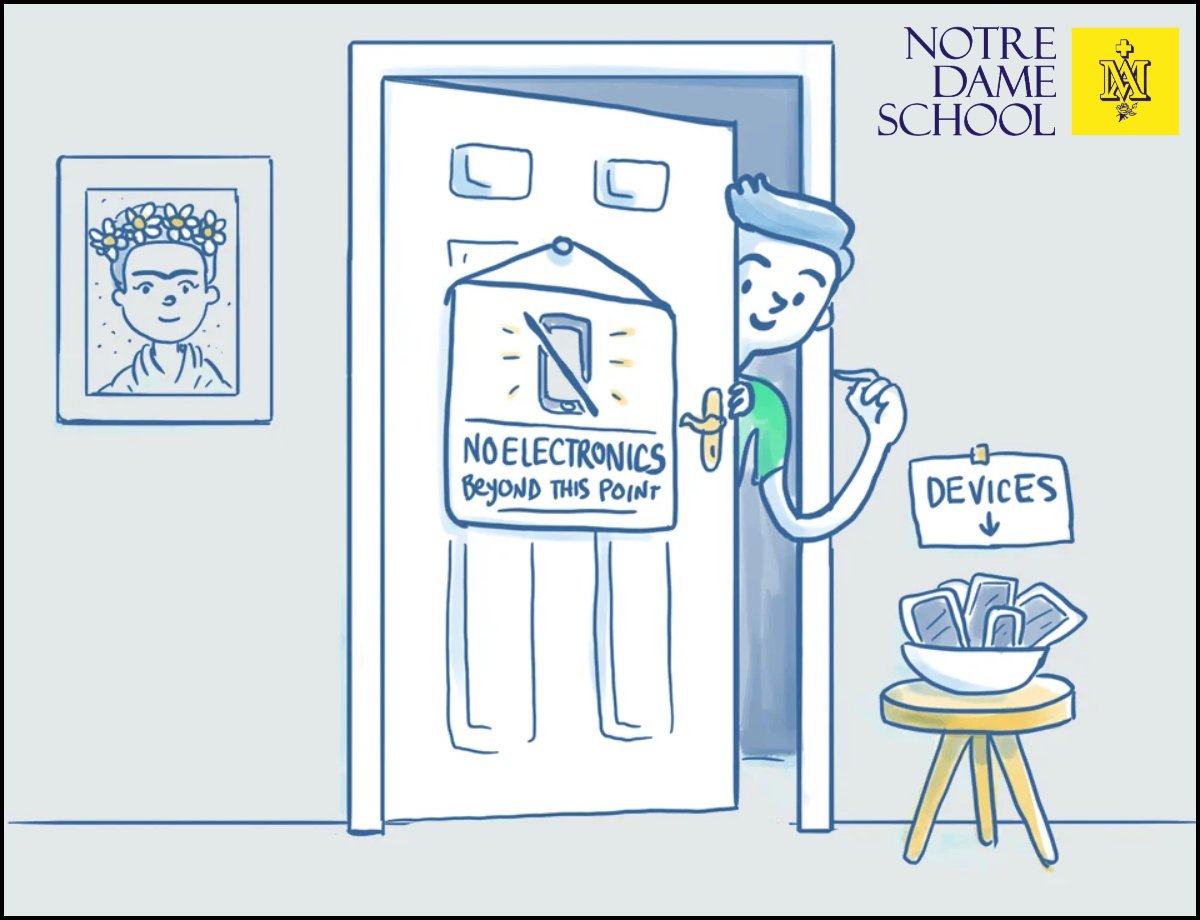
We are excited to announce that next week we will be running a school-wide initiative: Tech-Free Bedroom Week. This is a simple, voluntary challenge designed to support wellbeing, sleep and concentration.
Research shows that access to screens and technology in the bedroom can disrupt sleep and this has a knock-on effect on mood and cognitive function. Key findings include:
1. Blue light from screens delays the production of melatonin, the hormone responsible for regulating sleep. This can make it harder for teenagers to fall asleep and reduce the quality of their sleep.
2. Notifications and alerts — even vibrations — can interrupt deep sleep cycles, leaving students tired and less able to concentrate during the day.
3. Late-night engagement with social media, games, or videos increases mental stimulation, making it more difficult for the brain to switch off.
Better sleep is linked to improved mood, concentration, memory, and academic performance. Encouraging students to take a break from screens in their bedrooms can support all these areas.
A recent BBC News article highlighted the impact of removing technology from teenagers’ bedrooms. In a small UK study, students who kept devices out of their bedrooms for five nights reported falling asleep faster, feeling calmer and less stressed, improved focus in lessons and a sense of regained control over their evenings
You can read the full article here: What happened when teens tried out tech-free bedrooms? – BBC News
So, students are invited to participate in a five-night challenge from Monday 26th to Friday 30th. The aim is simple; no phones, tablets, laptops, or consoles in the bedroom overnight. The focus is on supporting students’ wellbeing and helping them experiment with habits that may improve sleep and daily functioning.
You can support your daughter by; encouraging devices to be charged outside the bedroom, discussing bedtime routines and alternative calming activities and supporting reflection on what worked and what didn’t after the week is completed. You may even wish to take part in the challenge yourself – many staff at school have also pledged to do so.
Please discuss this initiative with your daughter and encourage them to take part if they feel able. Participation is entirely optional, but we hope that as many students as possible will try this short challenge and notice the benefits for themselves.
Thank you for your support in helping our students develop healthy sleep habits and mindful relationships with technology.
