
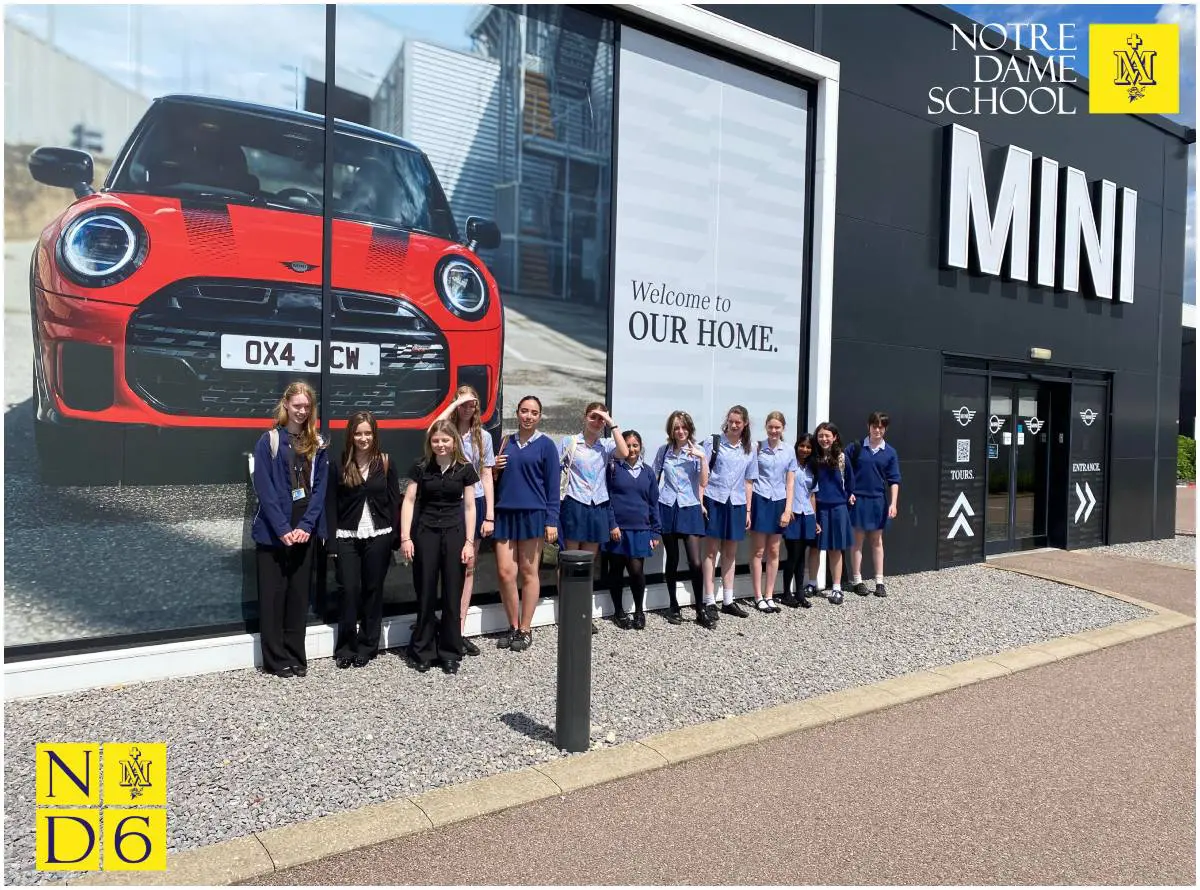
The Computer Science department took girls from years 9 to 12 to the BMW Mini iFactory in Oxford.
The aim of the trip was to see real world application of the computer science concepts they study in class. They got to see how algorithms, automation, and data processing are applied in a real-life manufacturing environment. They were exposed to robotics and automation, seeing how the Mini plant uses industrial robots and automated systems for tasks like welding, assembly and stock control.
In context of the wider world (beyond the curriculum) the pupils gained an understanding how cars are manufactured and how the workforce has become multi-skilled and flexible over time.
Within the curriculum they gained knowledge of how algorithms are used in the real world, how algorithms are implemented in robotics, the limitations of autonomous robotics, the social implications of the advances in technology in general and in computer science and robotics in particular. They also saw how software is used in commercial/manufacturing settings and gained an understanding of the business processes used in manufacturing.
Careers:
The girls have expressed interest in careers they witnessed or were exposed to in discussions at the factory e.g. robotics engineering, car testing, metallurgy/welding, car design, robot design in general, designing robots that build cars, car marketing, robot manufacturing/maintenance, software developer, virtual reality in car design, engineering/designing car parts, quality control of finished cars, designing factories to maximise use of space, test driving.
Girls’ comments
“It’s great. I love robots. Lots of fun. Very interesting. Robots are really cool.”
“Insightful experience to see how computers can be integrated into factory and daily life processes.”
“It’s good to know that despite how good computers are human intervention is still needed.”
“One thing I learnt today – detailing and painting takes more time than the assembly of the main engineering parts!”